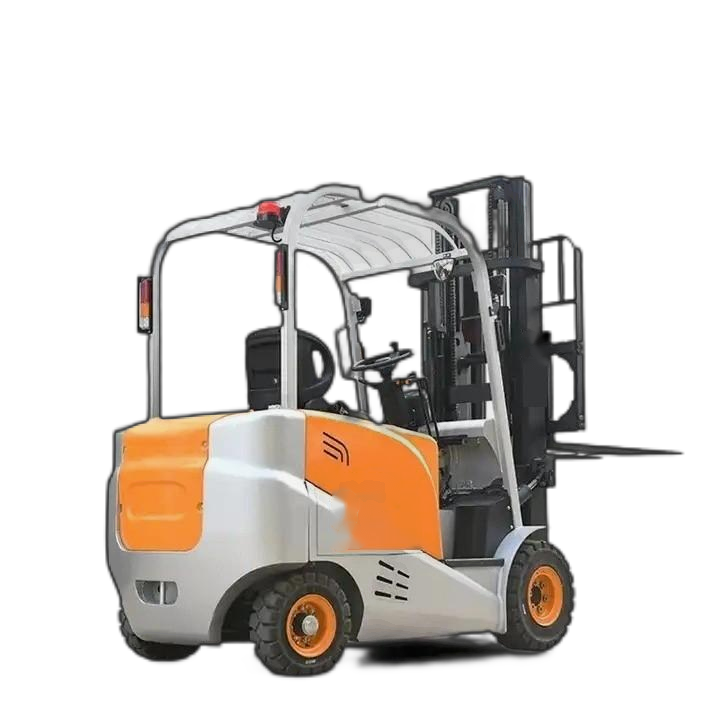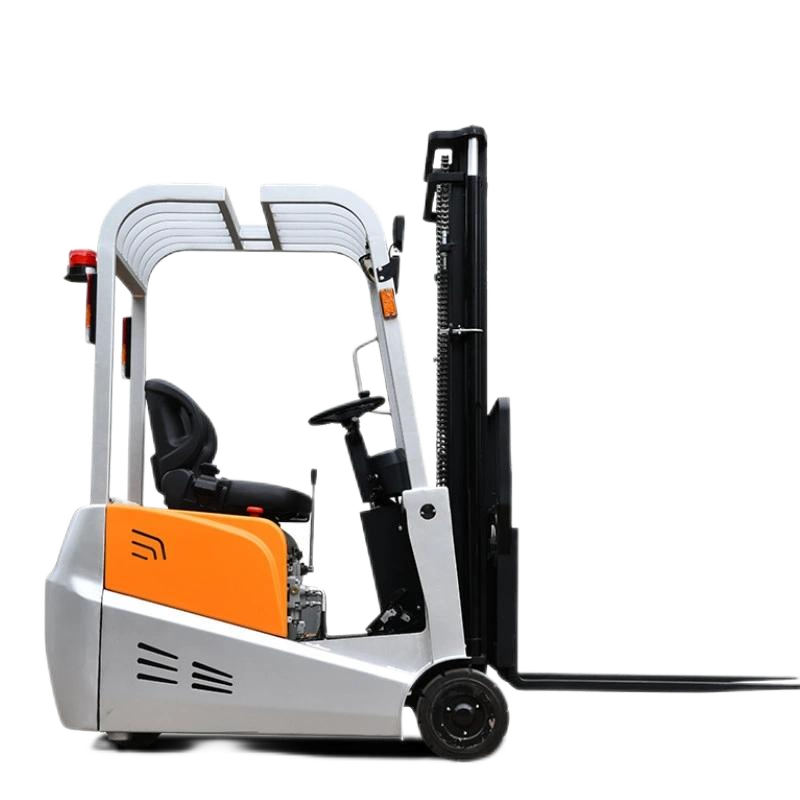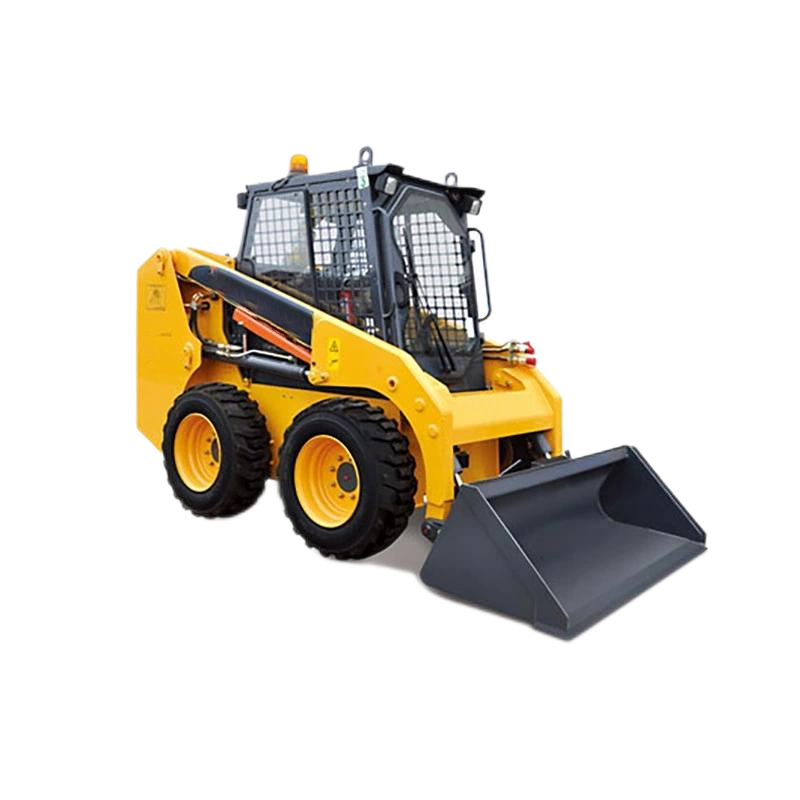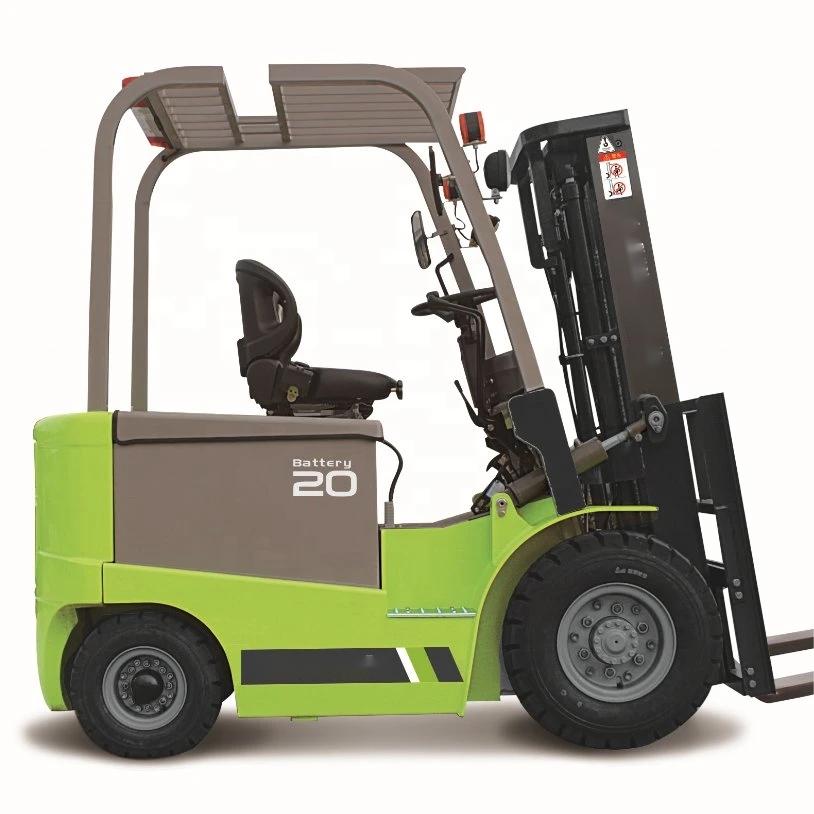

Most forklifts spend their working lives with nothing on the carriage but a standard pair of forks. Yet the same truck — with the right attachment — can handle bundled steel, rotate drums, clamp paper rolls and push-pull slip-sheeted cargo. For distributors and fleet owners, attachments are the highest-leverage upgrade available: they extend one machine's capability across far more tasks, often eliminating the need for a second vehicle entirely.
At LEAH MACH we supply both standard-configured electric forklifts and trucks prepared for hydraulic attachments. This guide explains the main attachment types, the performance trade-offs every buyer must understand, and how to spec a truck for attachment work correctly.
I. The Most Common Attachments and What They Do
1. Side Shifter — the universal first upgrade
The side shifter moves the entire fork carriage laterally, typically ±100 mm. Drivers position forks against pallets without repositioning the whole truck, which cuts cycle time noticeably in narrow aisles and dock work. It is the most frequently specified attachment because it benefits virtually every application.
2. Fork Positioner — precision without the driver leaving the seat
Hydraulically, the fork positioner adjusts the distance between the two forks, usually across a range of 200–1,200 mm. Fleets handling pallets of varying widths — mixed warehouses, beverage distribution, building materials — gain large time savings by eliminating manual fork adjustment stops.
3. Rotator — for drum, bin and dumping work
A rotator turns the load 360°. Waste and recycling operations, food processing (tipping bins), and chemical plants handling drums rely on it. Pairing a rotator with drum clamps or box clamps creates a dedicated tipping station out of an ordinary forklift.
4. Bale Clamps and Box Clamps — when there is nothing to slide forks into
Baled fibers, cotton, hay, recycled plastics, cartonized goods and white goods have no fork pockets. Clamps grip the load from both sides with independently adjustable pressure. Sensitive-load variants (such as paper roll clamps with pressure-reduction settings on rotation) protect product integrity.
5. Push-Pull — slip-sheet operations
The push-pull grips slip-sheeted cargo (no pallet at all) with a foldable sheet gripper and pushes loads onto racks or docks. Logistics operations switching from pallets to slipsheets save pallet purchase and return-freight costs; the attachment is what makes the transition possible.
6. Drum Handlers, Spoon Grabs and Special Tools
Drum handlers grip and lift steel or plastic drums; fork extensions, spoon grabs and mixing buckets serve construction and agriculture. Always match specialized tools to the actual cargo dimensions — improvised solutions with chains or modified forks are a leading cause of load damage and accidents.
II. The Capacity Derating Rule Every Buyer Must Understand
This is the single most important technical point in attachment selection: an attachment adds weight in front of the axle and adds load-center distance, both of which reduce the truck's safe rated capacity.
- A 3-ton forklift with a heavy rotator and drum clamp may be legally rated to lift only 2.2–2.5 tons at its new, longer effective load center.
- The reduced capacity is not negotiable — it is calculated from the truck's stability test with the specific attachment installed.
- Correct suppliers provide an updated load chart for the truck + attachment combination. If a seller cannot produce one, do not buy.
Selection consequence: when a task requires both heavy loads and an attachment, buyers often need the next tonnage class of truck — the attachment specification should be decided before ordering the forklift, not after.
III. Hydraulic and Electrical Requirements for Attachment-Ready Trucks
Attachments draw hydraulic flow and pressure from the truck. Before adding any hydraulic attachment, verify:
- Auxiliary hydraulic valves. The truck needs one additional hydraulic function for a clamp or positioner, two for a rotator (clamp + rotate). Specify valve count when ordering.
- Pump and flow capacity. High-demand attachments (fast-cycling clamps) require adequate hydraulic flow; undersized setups result in slow clamp response and reduced productivity.
- Hose routing and carriage class. Carriage class (ITA Class II/III) must match the attachment's mounting. Confirm compatibility in writing.
- Electrical interface for smart attachments. Modern paper-roll clamps with pressure sensors communicate with the truck's CAN system — relevant on lithium trucks with integrated electronics.
The advantage of ordering a lithium electric forklift pre-configured for the attachment is that hydraulics, valves and load chart are engineered together at the factory — retrofitting later usually costs more and voids parts of the warranty.
IV. Matching Attachments to Industries
Industry | High-value attachments |
Beverage & FMCG distribution | Fork positioner + side shifter combination |
Paper & printing | Paper roll clamp (rotation-aware pressure control) |
Waste & recycling | Rotator + bin/drum clamps |
Agriculture & cotton/bale export | Bale clamps |
Food cold chain | Push-pull (slip-sheet), stainless-friendly clamp faces |
Chemical & oils | Drum handlers, rotator for drum tipping |
Building materials | Fork extensions, side shifter, brick/blocks grabs |
V. Buying Checklist for Attachments
- Confirm effective load-center capacity derating with the truck maker's updated load chart
- Specify auxiliary hydraulic functions and confirm pump flow adequacy
- Match carriage class (ITA II/III) and hose routing
- Choose attachment weight and mounting by the actual heaviest daily load, not the occasional maximum
- Ask about clamp pressure adjustability for fragile loads
- Include spare hoses, seals and pads in the parts kit — wear items differ from standard forklift parts
Planning an attachment-equipped forklift? Send us your cargo types, weights and handling cycle — we configure the truck, hydraulics and attachment as one matched system and supply the combined load chart with your quotation.