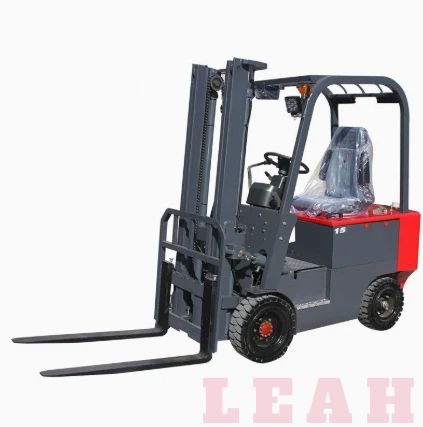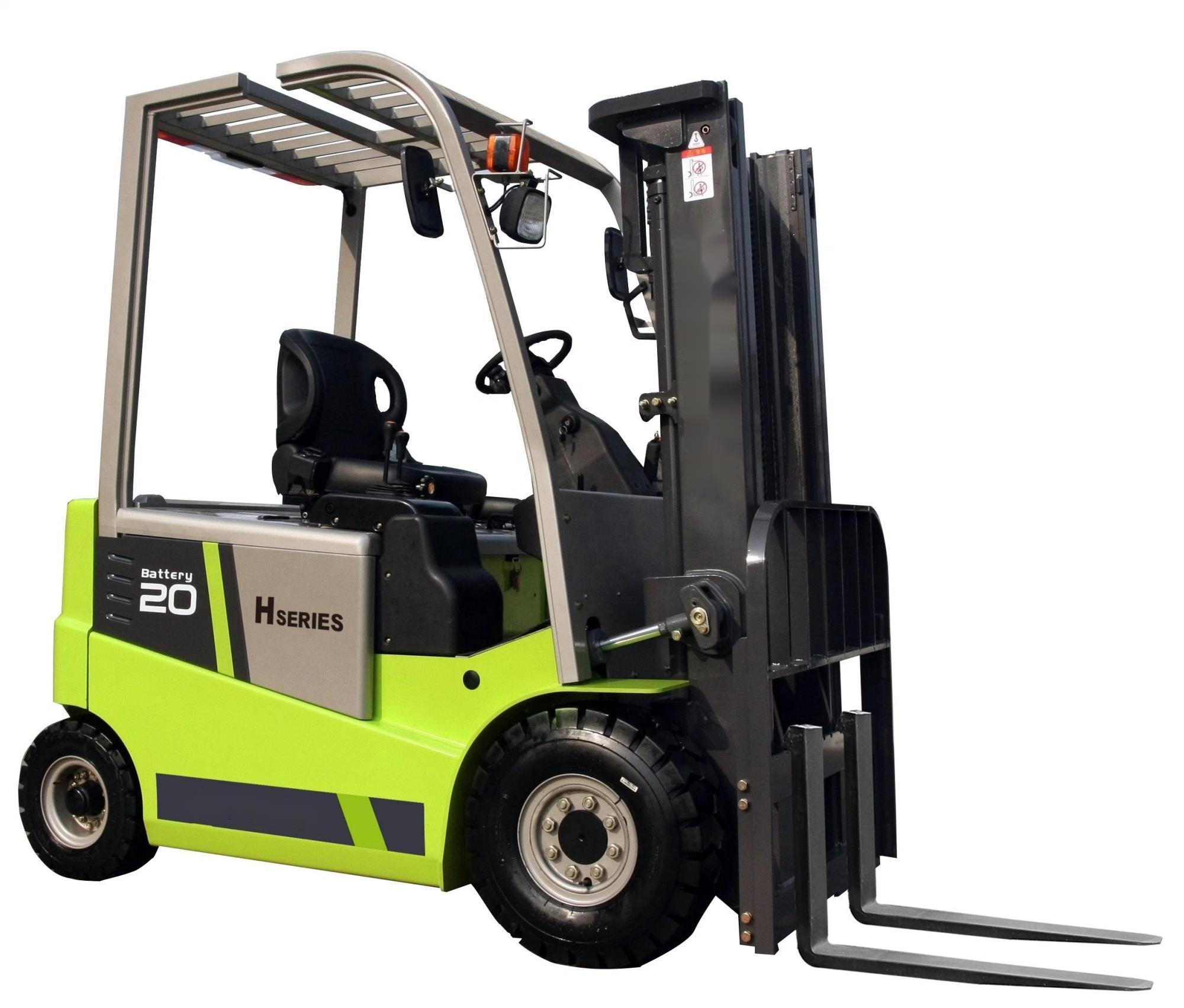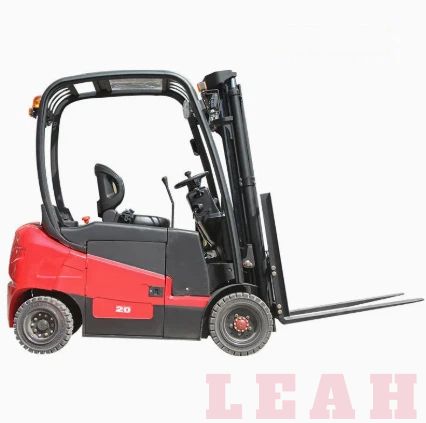

Many overseas buyers know which forklift they want — the harder question is how it actually reaches their warehouse. Importing an electric forklift from China involves four stages: trade terms negotiation, ocean freight, customs clearance, and inland delivery. This guide walks through each stage so you can plan costs and timelines realistically, avoid clearance delays, and take delivery of a machine that is ready to work on day one.
Step 1: Choose the Right Incoterm (FOB vs CIF vs EXW)
The Incoterm you agree on determines who books the freight, who insures the cargo, and where the seller's responsibility ends.
Incoterm | Seller handles | Buyer handles | Best for |
EXW | Making goods available at factory | Everything: trucking, export clearance, freight, insurance | Buyers with a trusted freight forwarder in China |
FOB | Trucking to port + export customs clearance | Ocean freight, insurance, import clearance | Most first-time importers — the most common choice |
CIF | All of the above + ocean freight + insurance to your port | Import clearance, duties, inland delivery | Buyers who want a single landed price |
DDP | Everything door to door, including duties | Receiving only | Buyers in markets with complex clearance (check availability) |
Practical advice: if this is your first import, FOB is usually the safest balance. Your supplier handles export clearance (where their experience matters most), while your own freight forwarder controls the ocean leg — which keeps freight costs transparent and comparable across quotes.
Step 2: Understand How a Forklift Travels — Container Loading
Electric forklifts are heavy, dense cargo, and loading method affects both freight cost and machine condition on arrival.
- Under 2.5 tons / compact models: most 1.5–2 ton electric forklifts fit inside a 20ft container, often two units per 40ft container.
- 3-ton and larger models: depending on mast height and overhead guard, these may require a 40ft high-cube container, or flat-rack / Ro-Ro (roll-on/roll-off) shipping for oversized units.
- Battery handling: lithium battery packs are typically transported at roughly 30% state of charge per air/sea transport safety practice, with terminals protected and cables secured. Confirm with your supplier how the battery is disconnected and packed.
- Mast removal: tall triplex masts are often shipped detached and bolted back on at destination — ask for photos of the disassembly and a reassembly guide before shipment.
Tip: request the packed dimensions (L×W×H) and gross weight before confirming the order. These two numbers drive your entire freight quote.
Step 3: Freight Costs and Transit Times — What to Expect
Ocean freight pricing fluctuates, but the structure of the cost is stable:
- Export trucking + port charges (China side, usually included in FOB)
- Ocean freight — quoted per container (20ft/40ft) or per unit on flat rack
- Marine insurance — typically 0.1–0.3% of cargo value; always take it
- Destination charges — port handling, documentation fees at your local port
- Import duty + VAT — calculated on CIF value, not the machine price alone
Transit time depends on the route: Southeast Asia and the Middle East commonly take 7–20 days, West Coast North America 15–30 days, Europe 25–35 days, and South America or Africa 30–45 days. Add 5–10 days for port handling and clearance at destination.
Step 4: Customs Clearance — Documents You Must Have Ready
Incomplete paperwork is the #1 cause of clearance delays. Before the vessel departs, make sure you will receive:
- Commercial Invoice — with a realistic transaction value (under-declaring risks fines and insurance problems)
- Packing List — matching container contents piece by piece
- Bill of Lading (B/L) — check consignee details match your importer record exactly
- Certificate of Origin (C/O) — may reduce duty under preferential trade agreements
- CE Certificate / Declaration of Conformity — required for EU import; many other markets also ask for it
- MSDS + UN38.3 test summary for lithium batteries — increasingly requested by ports and customs in multiple countries
Duty rates vary widely by country and by HS code (electric forklifts generally fall under HS 8701.90 for tow tractors/trolley types or the machinery chapters for counterbalance units — your customs broker will confirm the exact code). As a planning figure, research your country's rate on electric industrial trucks before ordering, and add VAT/GST on top.
Step 5: Receiving, Inspection and First Start-Up
When the forklift arrives:
- Inspect the packaging before signing the delivery receipt — photograph any damage.
- Check the machine against the packing list: model, serial number, battery pack, charger, spare parts box, manuals.
- Reassembly checks: mast bolts torqued to spec, hydraulic oil level, tire pressure, electrolyte/battery connectors, charger matched to your local voltage (confirm 380V/50Hz vs 220V/60Hz at order time, not at delivery).
- First power-up: run the charger through one full cycle, test lift/tilt/travel, and verify error codes are clear.
- Register the machine — keep the invoice and C/O together; several markets require them for future resale or warranty claims.
Frequently Asked Questions
Q: Can I import just one forklift, or is there a minimum?A: A single unit is fine. One compact electric forklift usually fits a 20ft container; the freight cost per unit drops significantly if you can fill a 40ft container (typically 2–4 units depending on model).
Q: How long does the whole process take from payment to delivery?A: Production lead time is commonly 15–30 days depending on model and order backlog. Add booking time, ocean transit (7–45 days by route) and clearance. A realistic end-to-end plan for a first order is 6–9 weeks.
Q: Who is responsible if the forklift is damaged during shipping?A: Under FOB, risk transfers to the buyer once goods are loaded on the vessel — which is exactly why marine insurance is essential. Document any damage with photos immediately and notify both the insurer and the supplier within the claim window.
Q: Does the supplier handle my country's import customs?A: Under FOB/CIF, no — your side handles import clearance. If you prefer the supplier to arrange everything including duties, ask whether DDP terms are available for your destination.
Conclusion: importing an electric forklift from China is a well-established process, not a gamble. The buyers who avoid surprises are the ones who (1) fix the Incoterm and packed dimensions early, (2) collect the full document set before sailing, and (3) budget duty + VAT + destination charges into the landed cost from day one. If you would like a machine-specific shipping plan — container type, loading drawings and a document checklist for your port — contact our export team with your destination country and target model.